Gustavo Marques - Portfolio
Professional Experience - confidencial (NDA)
Research on Agenda
Professional Experience - Confidential (NDA)
Research on Agenda
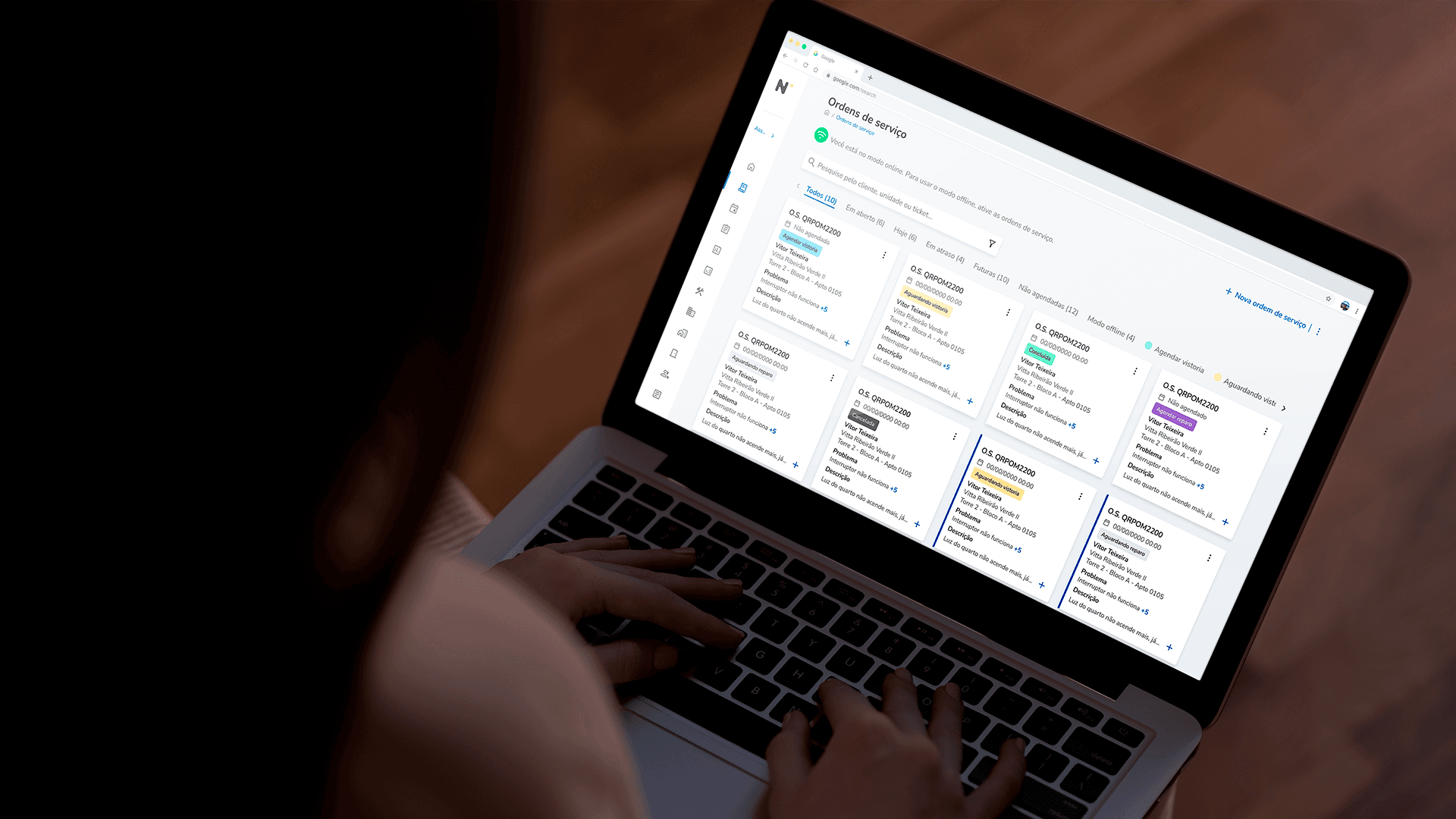
NDA (Non Disclosure Agreement): I cannot share all information due to confidentiality reasons, but I can provide general details about my involvement in the project. The interfaces presented do not replicate the original content; I have altered information to preserve confidentiality. I can provide more details during a secure job interview.
NDA (Non Disclosure Agreement): I cannot share all information due to confidentiality reasons, but I can provide general details about my involvement in the project. The interfaces presented do not replicate the original content; I have altered information to preserve confidentiality. I can provide more details during a secure job interview.
Overview
We conducted qualitative research to understand how users perceive and utilize the "agenda" feature in the Technical Assistance module on Modular. Our goal was to optimize the user experience and ensure that the agenda interface meets their needs.
We conducted qualitative research to understand how users perceive and utilize the "agenda" feature in the Technical Assistance module on Modular. Our goal was to optimize the user experience and ensure that the agenda interface meets their needs.
Our role
I conducted this research in collaboration with UX Researcher Gustavo Dias. During the review process and interviews, we worked with the project's Product Owner (PO), Emily Formagio, who provided us with valuable insights. After analyzing the data, we presented the results to the design manager and the PO manager. They considered the research fundamental and decided that instead of the squad continuing with the current course, we should remain to implement the identified improvements.
I conducted this research in collaboration with UX Researcher Gustavo Dias. During the review process and interviews, we worked with the project's Product Owner (PO), Emily Formagio, who provided us with valuable insights. After analyzing the data, we presented the results to the design manager and the PO manager. They considered the research fundamental and decided that instead of the squad continuing with the current course, we should remain to implement the identified improvements.
Metodology
The research adopted a qualitative approach, using in-depth interviews to collect descriptive data of attitudinal dimensions. We invited six users, including two technical assistance coordinators and four AT analysts, from the regions of Araraquara, Ribeirão Preto, and Bauru. Data collection took place from November 22 to 27, 2023. The interviews provided a detailed understanding of current practices and user needs, grounding our design recommendations.
The research adopted a qualitative approach, using in-depth interviews to collect descriptive data of attitudinal dimensions. We invited six users, including two technical assistance coordinators and four AT analysts, from the regions of Araraquara, Ribeirão Preto, and Bauru. Data collection took place from November 22 to 27, 2023. The interviews provided a detailed understanding of current practices and user needs, grounding our design recommendations.
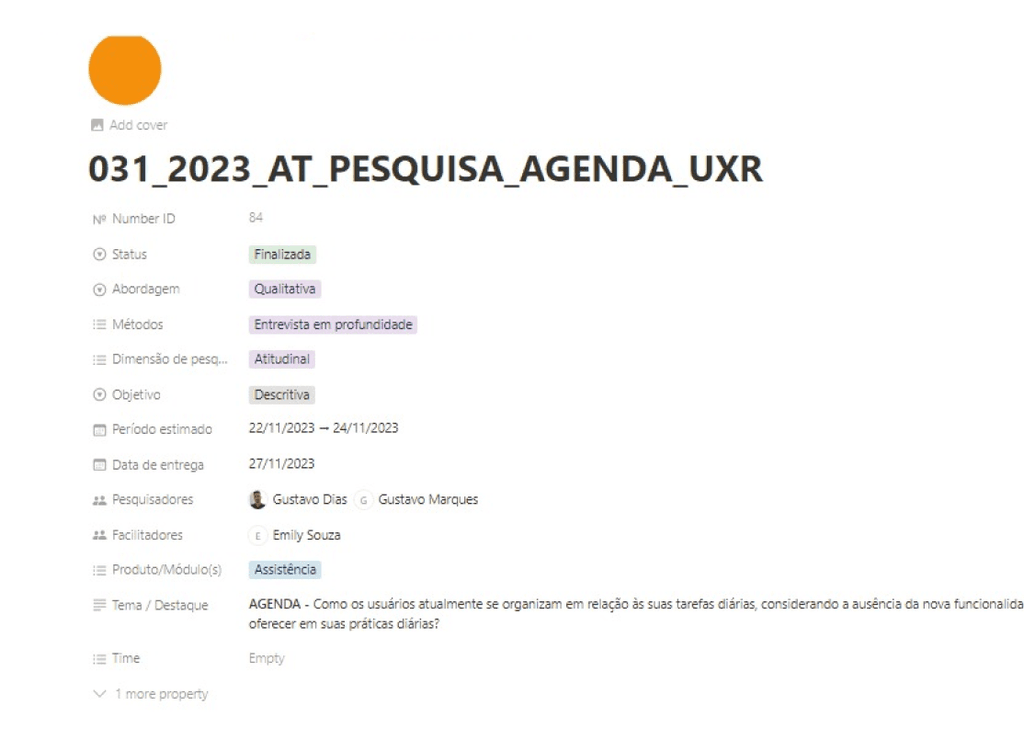
Research question
How do users currently organize their daily tasks in the absence of the new feature, and what is their perception of the utility that an agenda feature can offer in their daily practices?
How do users currently organize their daily tasks in the absence of the new feature, and what is their perception of the utility that an agenda feature can offer in their daily practices?
Research objective
Understand the daily organization of analysts and technicians in executing Service Orders (OS) and how they define and apply the SLA in their organizations.
Understand the daily organization of analysts and technicians in executing Service Orders (OS) and how they define and apply the SLA in their organizations.
Specific objectives
Foster Understanding of Agenda Organization: Explore and understand the current methods users use to organize their agendas, seeking insights to inform design improvements.
Explore Perspectives on the "Open" Categorization: Evaluate user preference between "opening delay date" and "SLA" (Service Level Agreement) to understand which approach aligns better with their needs and expectations.
Identify Opportunities from Other Organizational Interfaces: Explore specific ways other interfaces for organizing OS can be improved to facilitate and optimize users' workflows.
Understand the Visualization and Separation of Tasks (OS) within Teams: Observe how OS are presented within the tools they currently use.
Foster Understanding of Agenda Organization: Explore and understand the current methods users use to organize their agendas, seeking insights to inform design improvements.
Explore Perspectives on the "Open" Categorization: Evaluate user preference between "opening delay date" and "SLA" (Service Level Agreement) to understand which approach aligns better with their needs and expectations.
Identify Opportunities from Other Organizational Interfaces: Explore specific ways other interfaces for organizing OS can be improved to facilitate and optimize users' workflows.
Understand the Visualization and Separation of Tasks (OS) within Teams: Observe how OS are presented within the tools they currently use.
Design direction
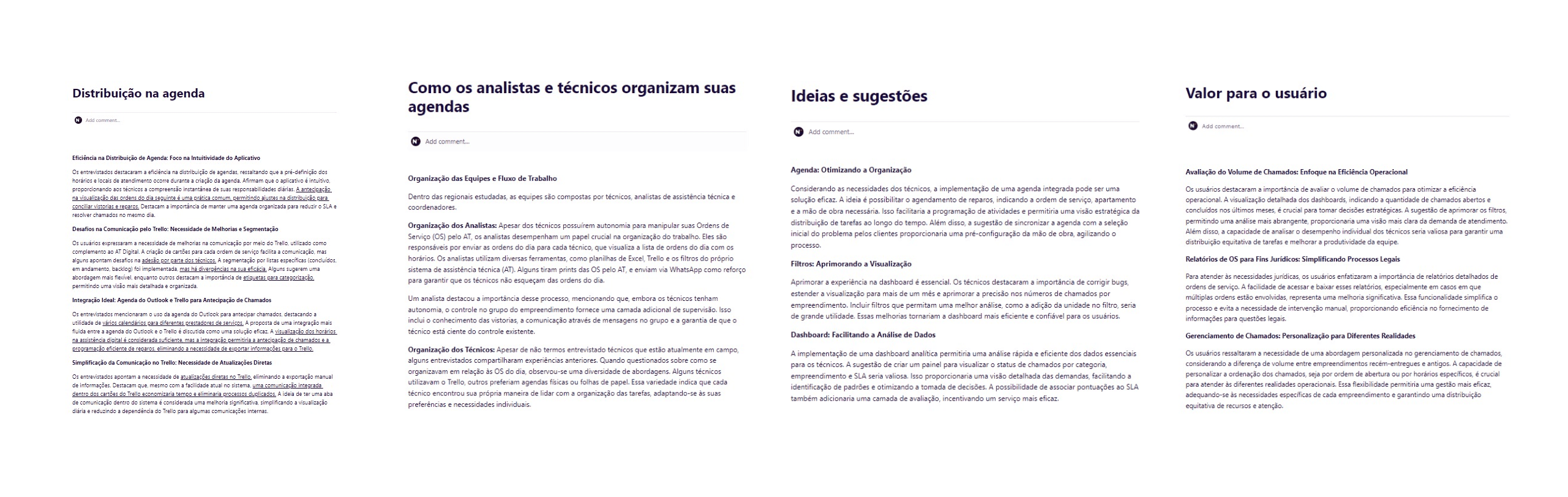
Create an Agenda to Optimize Organization: Develop an agenda in AT Digital to facilitate the scheduling of repairs and inspections, indicating OS, project, and necessary labor. Reason: It facilitates activity scheduling and provides a strategic view of task distribution.
Create a Dashboard for Data Analysis: Implement a dashboard to visualize the volume of ticket statuses by category, project, and SLA, providing a detailed view of demands. Reason: It provides a detailed view, identifies patterns, and optimizes decision-making.
Service Order Status: Enhance filters for detailed evaluation of tickets, indicating the status and the number of open and closed tickets, essential for optimizing operational efficiency. Reason: It is essential for optimizing operational efficiency and enabling strategic decisions.
Management of Customized Service Orders: Enable customization in ticket sorting, considering volume and specific characteristics of each project. Reason: It meets different operational realities, ensuring equitable resource distribution.
Create an Agenda to Optimize Organization: Develop an agenda in AT Digital to facilitate the scheduling of repairs and inspections, indicating OS, project, and necessary labor. Reason: It facilitates activity scheduling and provides a strategic view of task distribution.
Create a Dashboard for Data Analysis: Implement a dashboard to visualize the volume of ticket statuses by category, project, and SLA, providing a detailed view of demands. Reason: It provides a detailed view, identifies patterns, and optimizes decision-making.
Service Order Status: Enhance filters for detailed evaluation of tickets, indicating the status and the number of open and closed tickets, essential for optimizing operational efficiency. Reason: It is essential for optimizing operational efficiency and enabling strategic decisions.
Management of Customized Service Orders: Enable customization in ticket sorting, considering volume and specific characteristics of each project. Reason: It meets different operational realities, ensuring equitable resource distribution.
Challenges
Short Development Timeline: We faced a very tight deadline to develop the entire research. To manage this limitation, we gathered our team and prioritized the most critical needs. We maintained strict time management to ensure deadlines were met.
Difficulty Recruiting Interviewees: Recruiting the necessary number of participants for the interviews was a challenge due to the short timeframe and the unavailability of many users.
Understanding the Work Context of Professionals: Understanding the daily context of post-construction professionals was challenging for me. I needed to dedicate time to study their routines and processes to conduct the interviews effectively.
Short Development Timeline: We faced a very tight deadline to develop the entire research. To manage this limitation, we gathered our team and prioritized the most critical needs. We maintained strict time management to ensure deadlines were met.
Difficulty Recruiting Interviewees: Recruiting the necessary number of participants for the interviews was a challenge due to the short timeframe and the unavailability of many users.
Understanding the Work Context of Professionals: Understanding the daily context of post-construction professionals was challenging for me. I needed to dedicate time to study their routines and processes to conduct the interviews effectively.
Learnings
Research Structuring: I learned a lot from UX Researcher Gustavo Dias on how to structure a research study well, including choosing methods, approach, scope, object, and creating scripts.
Interview Direction: In practice, I developed skills to direct the conversation during interviews, ensuring that users did not deviate from the main subject without biasing their responses.
Use of Analysis Tools: I learned to use the Maze tool to analyze and categorize responses, which was essential for organizing and interpreting the collected data.
Research Structuring: I learned a lot from UX Researcher Gustavo Dias on how to structure a research study well, including choosing methods, approach, scope, object, and creating scripts.
Interview Direction: In practice, I developed skills to direct the conversation during interviews, ensuring that users did not deviate from the main subject without biasing their responses.
Use of Analysis Tools: I learned to use the Maze tool to analyze and categorize responses, which was essential for organizing and interpreting the collected data.
Shall we work together?
Gustavo Marques
UX/UI Designer